

A retaining wall is a structure engineered to hold back soil on a slope, preventing erosion and creating level, usable space in your yard. For Atlanta homeowners dealing with hilly terrain and the region’s notorious red clay, these walls are often essential rather than optional. The Piedmont clay that underlies most of Metro Atlanta expands when wet and shrinks when dry, creating pressure that can destabilize slopes and threaten foundations without proper support.
If you’re planning a retaining wall project in 2026, understanding realistic costs upfront helps you budget wisely and avoid surprises. This guide focuses specifically on the Atlanta metro area and nearby suburbs—Decatur, Sandy Springs, Marietta, Brookhaven, and beyond—where local soil conditions and building codes shape what you’ll actually pay.
For professionally built retaining walls in Atlanta, most homeowners spend between $5,500 and $14,000+ per project, with many landing in the $7,500 to $10,000 range. These figures reflect the additional drainage and engineering work that clay soil demands. At Heide Contracting, we specialize in structurally sound, long-lasting retaining walls and masonry.
Ready to get an accurate estimate for your property? Schedule a free on-site consultation with Heide Contracting to receive a clear, itemized quote based on your specific site conditions.
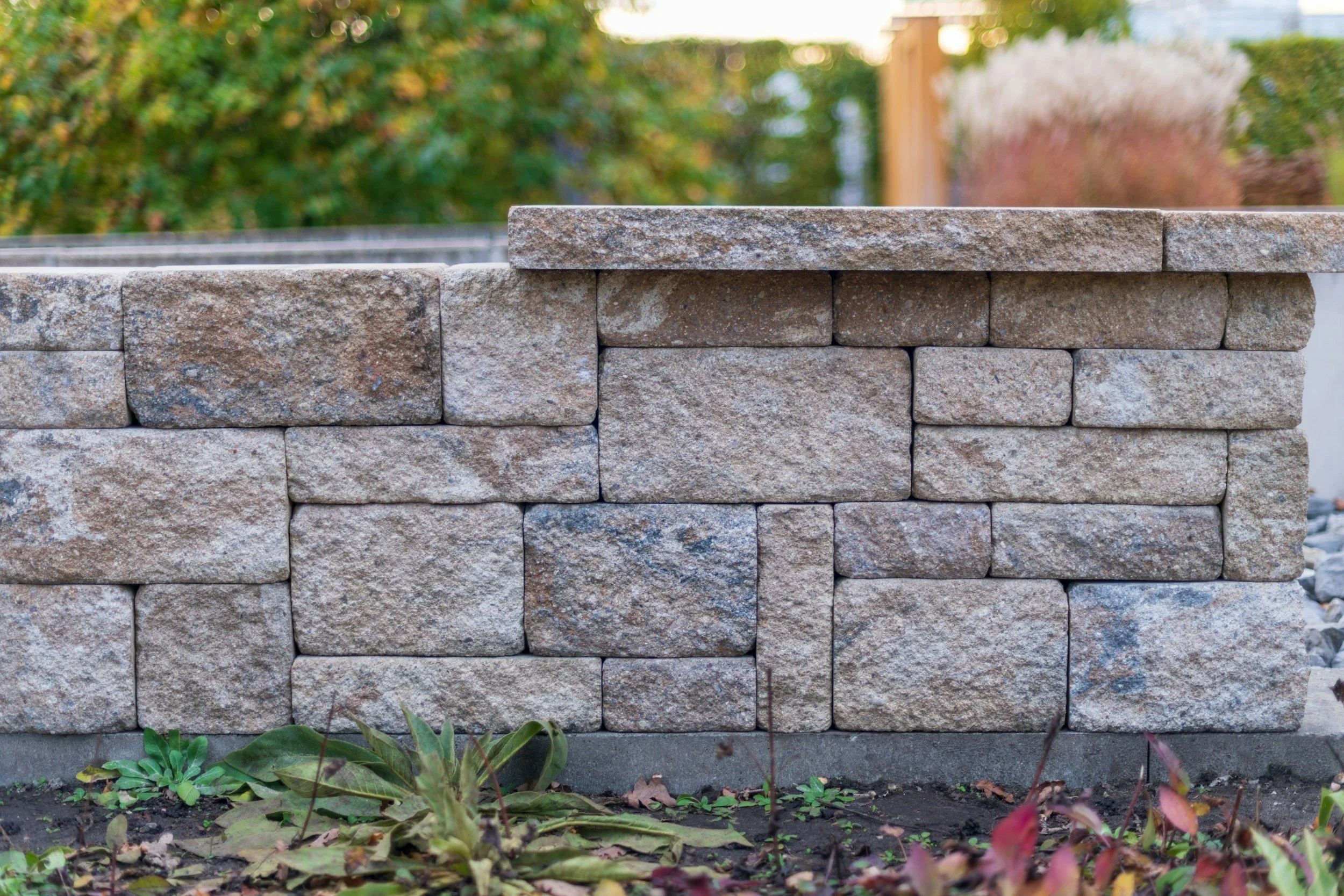
The image depicts a completed engineered retaining wall made of interlocking concrete blocks, surrounded by well-maintained landscaping in a backyard. The wall enhances the property's curb appeal while effectively preventing soil erosion and providing usable space for flower beds.
Average Retaining Wall Costs in 2026
The total cost of a retaining wall depends on several interconnected factors: wall length, wall height, materials, and your specific Atlanta site conditions. There’s no single “per foot” number that applies to every project because a 3-foot garden terrace and a 6-foot driveway support wall require vastly different engineering and materials.
National average figures for 2026 hover around $6,000 to $10,300 per project.
Here’s what most Atlanta homeowners can expect:
Cost per square foot: Roughly $40–$70 for a professionally engineered wall
Cost per linear foot: Approximately $200–$350 for walls 3–5 feet tall
Small retaining wall projects: Garden terraces or flower beds start around $3,500–$5,000
Large structural walls: Hillside stabilization or driveway support walls can exceed $20,000
These ranges include professional labor, proper drainage installation, and basic engineering suitable for Atlanta building codes. However, steep slopes, tight equipment access in older intown neighborhoods, and complex soil conditions can push costs toward the higher end of these estimates.
Retaining Wall Cost Estimator by Size
Retaining wall cost is most accurately calculated by square foot—that is, the wall’s height multiplied by its length. This approach accounts for the fact that taller walls require exponentially more materials, reinforcement, and labor than shorter walls of the same length.
Let’s walk through some example sizes to illustrate how wall size affects your estimated cost:
Example 1: Small Garden Wall
Dimensions: 20 ft long × 3 ft tall = 60 square feet
Cost range: At $45–$70 per square foot, expect roughly $2,700–$4,200
Example 2: Medium Terrace Wall
Dimensions: 40 ft long × 4 ft tall = 160 square feet
Cost range: At $50–$80 per square foot, expect roughly $8,000–$12,800
Example 3: Large Hillside Wall
Dimensions: 50 ft long × 5 ft tall = 250 square feet
Cost range: At $55–$90 per square foot, expect roughly $13,750–$22,500
Walls above 4 feet in Atlanta frequently require professional engineering, geogrid reinforcement, or terracing to meet code and ensure stability. These requirements push the cost per square foot higher because you’re paying for more materials, deeper footings, and a structural engineer’s stamp on the design.
Heide Contracting uses on-site measurements and thorough soil evaluation rather than generic online calculators. Every Atlanta lot is different, and an accurate estimate requires understanding your specific slope angle, soil composition, drainage patterns, and how the wall will interact with your home’s foundation.
Other Factors That Affect Retaining Wall Cost
Beyond square footage, your retaining wall cost depends heavily on soil type, slope steepness, drainage complexity, equipment access, and finish quality. These additional cost factors are especially significant in Atlanta, where red clay soil, older intown neighborhoods with narrow side yards, and frequent heavy rainfall create unique challenges.
The following sections break down the key cost drivers every homeowner should understand before budgeting for a retaining wall. At Heide Contracting, we walk through each of these factors during your consultation and include them as transparent line items in your quote—so there are no surprises when construction begins.
Building Material
Material choice has one of the biggest impacts on your overall cost, durability, and the wall’s aesthetic fit with your home. Here are the common materials used for Atlanta retaining walls:
Concrete blocks (segmental retaining wall blocks): $25–$45 per square foot installed. Interlocking concrete blocks like Allan Block or Keystone are modular, work well with geogrid reinforcement, and can last 50–100+ years with proper drainage. This is often the most cost effective option for structural applications.
Poured concrete walls: $35–$60 per square foot. Concrete retaining walls offer seamless strength ideal for cantilevered designs, but require formwork and careful joint planning to avoid cracking in expansive clay.
Natural stone: $50–$100 per square foot. Stone delivers timeless curb appeal that complements historic Atlanta homes, though it requires skilled masons and deeper footings due to its weight.
Wood retaining walls (pressure-treated timber): $15–$35 per square foot. While timber has lower upfront material costs, it typically lasts only 20–30 years in Atlanta’s wet climate and is generally limited to walls under 3 feet by code.
Gabion walls (wire mesh baskets filled with rock): $45–$75 per square foot. Gabion baskets offer excellent drainage and erosion control but have an industrial aesthetic that doesn’t suit every property.
Heide Contracting often recommends engineered wall blocks or natural stone that complements historic facades in neighborhoods like Virginia-Highland, Grant Park, or Inman Park. The right material balances your budget, desired lifespan, and the architectural character of your home.
Type of Wall
The structural system behind your wall—not just the visible material—significantly affects both cost and performance. Here are the main types:
Gravity walls rely on their own mass to resist soil pressure. These are typically shorter walls (under three feet) using stacked block or stone, making them the cheapest retaining wall option for garden beds and minor grade changes.
Cantilevered walls use an L-shaped concrete footing where the weight of backfill on the heel helps resist overturning. These are common for walls built 4–10 feet tall and cost more due to forming and rebar requirements.
Reinforced block walls combine segmental concrete blocks with geogrid layers that extend into the backfill, creating a reinforced soil mass. This approach is often more economical than poured cantilevered walls for taller retaining walls in the 4–8 foot range.
Tiered or terraced walls split the height across two or more shorter walls with planting areas between them. While material and labor costs may be 20–50% higher, tiered systems are often more attractive, more stable on steep slopes, and can avoid the engineering requirements triggered by single tall walls.
Heide Contracting works with structural engineers as needed for cantilevered or heavily reinforced walls supporting driveways, garages, or home additions. We help you select the wall type that balances structural requirements, aesthetics, and budget.
Placement
Where your wall sits on the lot influences required strength, permitting complexity, and equipment access costs.
Walls supporting driveways, basement walkouts, or planned home additions need stronger, deeper foundations than simple garden terraces. A wall holding back soil beneath your car bears dramatically different loads than one framing flower beds.
Front-yard walls near the street in intown Atlanta often face stricter zoning requirements, including maximum wall height limits (commonly 4 feet without a variance). These local regulations affect both design options and permitting timelines.
Proximity to property lines, fences, and neighboring structures may require more careful engineering, additional labor for hand-excavation, and coordination with adjacent property owners. Tight access in neighborhoods like Candler Park or East Atlanta often means higher labor costs because crews can’t use full-size equipment.
Heide Contracting evaluates how each wall interacts with your existing foundation, decks, porches, and any future expansion plans—ensuring today’s wall doesn’t create problems for tomorrow’s renovation.
Land Preparation
Atlanta’s hilly terrain and variable soil mean site preparation can represent a significant share of your total investment. You can’t build a lasting wall on unstable ground.
Typical land preparation tasks include:
Clearing existing vegetation, old timber walls, or debris
Cutting and benching into slopes to create a level base
Hauling away excavated spoil (which adds trucking costs)
Compacting the base material to prevent settling
Stabilizing soft or saturated clay
For most residential lots, expect land prep to add $1,000–$5,000 or more to your project, depending on slope severity, access constraints, and the volume of material that needs removal.
Proper compaction—typically to 95% Proctor density—is essential. Skipping this step leads to settling, cracking, and premature failure. Heide Contracting can also coordinate tree and stump removal when roots interfere with new wall locations.
Waterproofing
Atlanta averages about 50 inches of rainfall annually, with intense summer storms that can dump several inches in hours. Waterproofing and moisture control are crucial for long term maintenance and wall longevity.
Waterproofing treatments and membranes typically add $2–$10 per square foot, depending on wall type and exposure level. The investment is worthwhile: industry estimates suggest that roughly 70% of retaining wall failures trace back to water-related issues.
There’s an important distinction between treatments:
Damp-proofing is a basic moisture barrier suitable for garden walls and simple grade changes
Full waterproofing membranes are essential when protecting basements, crawl spaces, or foundation walls
Heide Contracting includes appropriate waterproofing details in any wall tied into home foundations or new lower-level living areas. Skimping on waterproofing often leads to bulging, cracking, efflorescence (white mineral deposits), or hydrostatic failure that costs far more to repair than doing it right initially.
Reinforcements
Taller walls and those bearing heavy loads require structural reinforcement for both safety and code compliance. In Metro Atlanta, any wall over about 4 feet—or near a driveway, structure, or property lines—typically needs a structural engineer’s design.
Common reinforcement methods include:
Steel rebar in poured concrete walls, adding strength to resist bending and cracking
Geogrid layers extending from block walls into compacted backfill, creating a reinforced earth mass
Deeper footings or helical piles where soil is weak, wet, or expansive
Reinforcement materials and the additional labor to install them can add $3–$15 per square foot, especially for walls in the 5–8 foot range. This represents an additional cost but one that’s non-negotiable for structural integrity.
Heide Contracting collaborates with local engineers and includes all reinforcement costs transparently in your estimate. You’ll know exactly what’s required and why before construction begins.
Drainage
Proper drainage is often the difference between a wall that lasts decades and one that fails within a few years. This is especially true in Atlanta, where clay soil holds water and creates hydrostatic pressure that can push walls over.
Standard drainage details for Atlanta retaining walls include:
4-inch perforated drain pipe at the wall base
12-inch or wider gravel backfill (the “drainage chimney”) behind the wall
Weep holes through the wall face to relieve pressure
Positive outlet directing water away to a swale, storm drain, or street
Adding robust drainage systems increases the project budget but dramatically reduces the risk of wall movement, cracking, and catastrophic failure. A well-drained wall might cost 15–20% more upfront but avoids the 100%+ cost of rebuilding a failed wall.
Heide Contracting always includes drainage solutions as standard rather than treating them as optional add-ons. In our experience, walls without adequate drainage in Atlanta’s clay-heavy soil are simply not worth building.
French Drain and Related Work
A French drain is a gravel-filled trench containing a perforated pipe that collects and redirects groundwater. On wet Atlanta lots—particularly those with springs, high water tables, or water flowing toward the house—French drains are frequently installed alongside or above retaining walls.
French drains typically cost $3,000–$10,000 or more depending on length, depth, and trenching challenges. However, combining a French drain with your retaining wall project is often more cost effective than doing them as separate jobs. You’re already excavating, and the drainage infrastructure integrates naturally with the wall’s base drainage.
Heide Contracting can integrate French drains with crawl space conversions or basement lowering projects, solving water and structural issues together in a coordinated approach.
One often-overlooked expense: yard restoration after trenching and wall construction. Budget for new sod ($0.50–$1.00 per square foot) or seeding in areas disturbed by equipment and excavation.
Retaining Wall Cost by Location (Atlanta and Beyond)
While national averages provide a starting point, local labor rates, material availability, and building codes ultimately shape what you’ll pay. Atlanta’s strong construction market and high demand for hillside development push professional retaining wall pricing toward the upper end of national ranges.
Intown Atlanta neighborhoods (Inman Park, Midtown, Old Fourth Ward, Virginia-Highland) often see costs 15–25% higher than suburban areas. Tight lot access means smaller equipment, more hand labor, and longer project timelines. Street parking permits, coordination with neighbors, and historic district guidelines add complexity.
Suburban areas (Roswell, Alpharetta, Johns Creek, Marietta) generally have easier equipment access but similar permitting requirements. The cost savings on labor may be partially offset by longer travel times for crews.
Permitting practices vary by jurisdiction. Most Metro Atlanta counties require permits and often engineering drawings for:
Walls over 4 feet tall
Walls near property lines (setback requirements vary)
Walls supporting structures like driveways or garages
Walls in flood plains or erosion-prone areas
Permit fees typically range from $50–$300, with engineering adding $1,000–$3,000 for complex walls.
Heide Contracting is familiar with local inspectors and permitting processes across Fulton, DeKalb, Cobb, and Gwinnett counties. This experience helps keep projects on schedule and ensures your wall meets all local regulations from day one.
DIY vs. Professional Retaining Wall Installation
For a small retaining wall under 3 feet tall—think garden bed borders or minor grade changes in flower beds—a diy retaining wall project can be feasible for handy homeowners. Diy installation for these simple applications might cost $10–$30 per square foot in materials only.
However, structural walls protecting homes, driveways, or significant slopes should be walls built by professionals. Here’s why the cost difference matters:
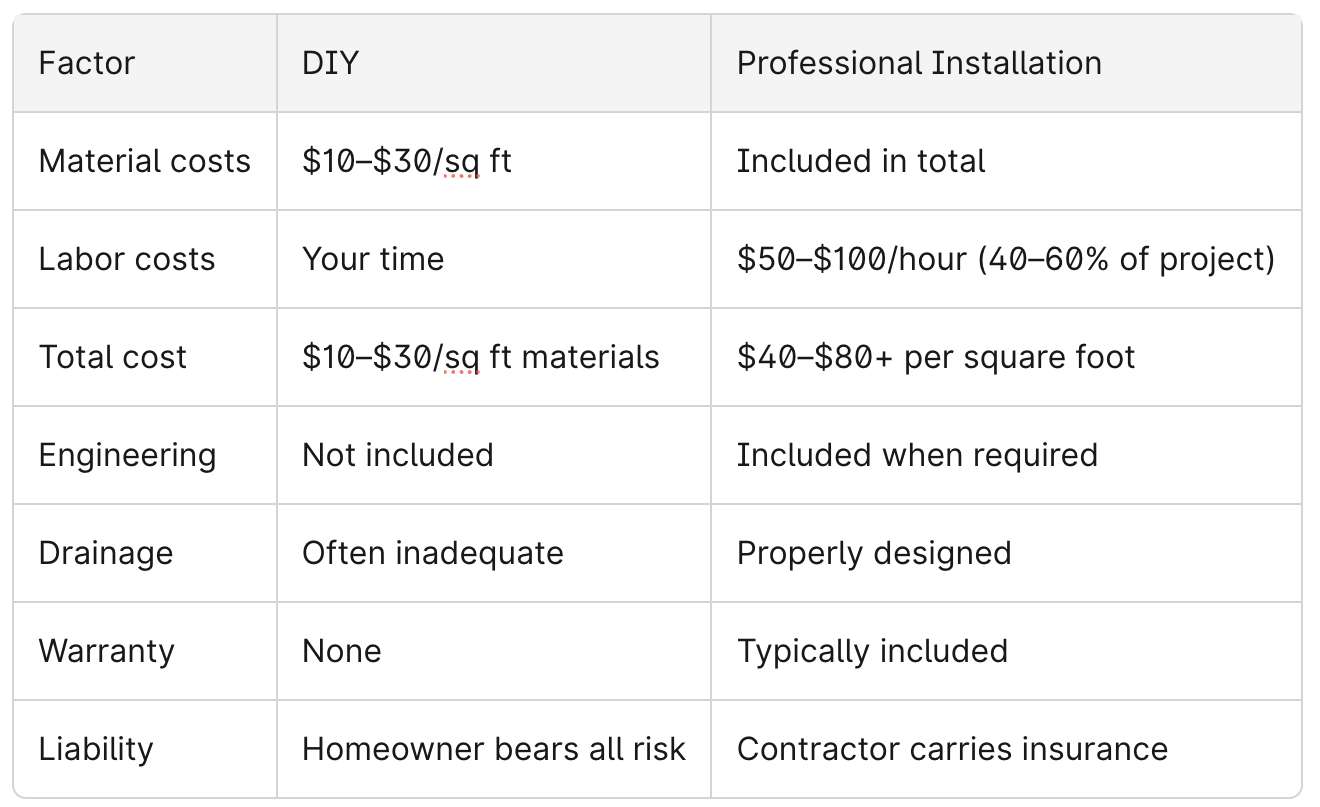
Cost difference of DIY vs. Professional Retaining Wall Installation
The risks of DIY on structural walls are significant:
Improper base preparation leads to settling and cracking
Inadequate drainage causes hydrostatic pressure buildup
Insufficient reinforcement allows walls to lean or collapse
Code violations can complicate future home sales or trigger enforcement
Heide Contracting focuses on engineered, long-lasting walls and may not be the cheapest option. But we aim to be the safest and most durable total investment—walls that solve problems rather than creating new ones.
If you’re considering DIY, we encourage you to at least get a free, no-obligation consultation and quote. Understanding the full scope helps you make an informed decision about whether to save money with DIY or invest in professional installation.
How Retaining Walls Tie Into Bigger Home Projects
Many homeowners contact us about retaining walls as part of a larger plan to make their existing Atlanta home more livable—rather than facing the cost and disruption of moving.
Retaining walls often enable other structural improvements:
Basement lowering and excavation: A retaining wall stabilizes soil around a deepened basement, adding 500–1,000+ square feet of usable space to your home
Walk-out basements: Creating a rear entrance below grade requires proper soil retention and drainage
Underground garages: Carving parking into a hillside demands robust structural walls
Crawl space conversions: Stabilizing the perimeter allows conversion of unusable crawl spaces into dry storage or living areas
Heide Contracting often designs retaining walls to coordinate with these larger projects, maximizing usable space while addressing multiple issues in a single construction phase.
Structural repairs—such as bowing foundation walls, failing porch piers, or cracked slabs—are sometimes solved alongside new retaining walls and drainage improvements. When you’re already excavating and bringing in equipment, addressing related issues makes sense.
Think of your retaining wall as early infrastructure that supports future projects. A properly engineered wall installed today can accommodate the deck, patio, or addition you’re planning for next year.
When to Repair or Replace an Existing Retaining Wall
Many Atlanta homes built before the 1990s have aging timber railroad tie walls or under-engineered block walls that are reaching the end of their useful lifespan. These older walls were often installed without proper drainage, and decades of clay soil movement have taken their toll.
Warning signs that your wall needs attention:
Wall leaning more than 1 inch off vertical
Cracks wider than 1/4 inch
Rotted, split, or insect-damaged timbers
Soil washing through joints after rain
Water pooling behind the wall
Visible bulging or bowing
Cost considerations for repair vs. replacement:
Minor repairs and drainage upgrades may run a few thousand dollars
Partial rebuilds with reinforcement and new drainage can be mid-range
Full replacement with a new engineered wall is a larger investment but often safer and more economical long term than repeated repairs
Example scenario: A homeowner in Decatur has a failing 30-year-old timber wall, 30 feet long and 4 feet tall. The timbers are rotting, the wall leans 3 inches, and soil washes into the yard during storms. Rather than attempting repairs, replacement with an engineered block wall and integrated French drain provides a 75–100 year solution. The project might cost $9,000–$15,000 but eliminates ongoing maintenance and protects the slope permanently.
Heide Contracting assesses whether an existing wall can be stabilized or must be rebuilt. When possible, we can reuse sound stone or block to preserve your property’s character while addressing the underlying structural and drainage issues.
Frequently Asked Questions About Retaining Wall Costs
These are common questions Atlanta homeowners ask during consultations:
What’s the cheapest usable material for a retaining wall in Atlanta? Interlocking concrete blocks typically offer the best balance of low cost and durability, ranging from $25–$45 per square foot installed. Timber is cheaper upfront but has a much shorter lifespan in our wet climate. For anything structural, concrete blocks are generally the most cost effective choice.
How long do different wall types last? With proper drainage and construction:
Concrete block walls: 75–100+ years
Natural stone walls: 75–100+ years
Poured concrete walls: 50–75 years
Pressure-treated timber: 20–30 years
Is a retaining wall worth the investment? Does it add home value? Yes. A well-built retaining wall can increase property value by 5–10% by creating usable space, improving curb appeal, and demonstrating that erosion control and drainage issues are resolved. Walls also protect foundations and prevent costly soil erosion damage.
Can a retaining wall help with crawl space moisture or basement leaks? Absolutely. Retaining walls with integrated drainage redirect water away from your foundation. Heide Contracting frequently coordinates retaining wall projects with crawl space conversions and basement waterproofing to solve water intrusion at its source.
When are permits and engineering required in Metro Atlanta? Most jurisdictions require permits for walls over 4 feet tall, walls near property lines, or walls supporting structures. Engineering is typically required for walls over 4 feet. Permit approval usually takes 2–6 weeks depending on the jurisdiction and complexity.
How long does a typical residential retaining wall project take? For a 30–40 linear foot wall, expect roughly:
Excavation and site prep: 2–3 days
Wall construction: 2–3 days
Drainage, backfill, and cleanup: 1–2 days
Total timeline: About 1–2 weeks from start to finish
Larger or more complex walls, or projects requiring custom engineering, may take longer.
Why Work With Heide Contracting for Your Retaining Wall
Heide Contracting is a structural remodeling specialist—not just a landscaper who happens to stack blocks. Our focus on safety, proper engineering, and long-term performance means your wall will still be standing strong decades from now, protecting your home and expanding your usable outdoor space.
What sets us apart:
Deep experience with Atlanta’s clay soils and challenging slopes
Structural repair background—we understand how walls interact with foundations
Commitment to preserving historic curb appeal in established neighborhoods
Coordination with full home renovations including basement lowering, crawl space conversions, and additions
Clear communication and realistic timelines
Our process:
On-site inspection of your slope, soil, and drainage patterns
Discussion of your goals, budget, and any future renovation plans
Accurate measurements and soil/drainage assessment
Delivery of a clear, itemized quote with no hidden costs
We plan access, staging, and cleanup to minimize disruption to your daily life. You’ll know what to expect and when to expect it.
Ready to get started? Contact Heide Contracting to schedule your free consultation. We’ll provide a personalized retaining wall cost estimate based on your specific property and help you explore related structural upgrades that can transform your Atlanta home.